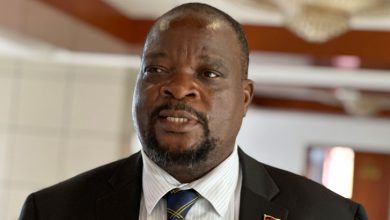
Minister of Finance, Economic Planning and Decentralisation Joseph Mwanamvekha says government will reverse pay as you earn (Paye) tax measures once the macro-economic environment stabilises.
However, the minister could not indicate a timeline.

Mwanamvekha’s position followed calls from Institute of Chartered Accountants in Malawi (Icam) and the Malawi Congress of Trade Unions (MCTU) for Treasury to expand the zero-tax Paye bracket and introduce other Paye bands to relieve taxpayers.
In an interview on the sidelines of the 2026/27 Ministerial Pre- Budget Consultations Meeting in Blantyre yesterday, the minister said all factors being equal, government wants to stabilise the economy as quickly as possible, but now Malawians must accept that the pain is necessary.
Said Mwanamvekha: “We are on a death bed, do or die. you have seen public debt at K22 trillion, interest rate at 37 percent, the ballooning fiscal deficit and now that grants and donor support is reducing; where do we go? We have to go local.
“When things normalise, some of these things, we will reverse them. I have done this in the past, when the macro economy aligned, I even reduced taxes.”
He said though “painful”, the tax measures being implemented are for the good of Malawians as government doesn’t have ill intentions.
Introduced in the 2025/26 Mid-Year Budget Review, the Paye measures focus on widening the tax base and came into effect on January 1 2026 after President Peter Mutharika signed into law the Taxation Act (Amendment) Bill.
The changes raised the zero-tax Paye threshold from K150 000 to K170 000, but also introduced higher marginal rates of 30 percent for incomes between K170 000 and K1.57 million, 35 percent for incomes up to K10 million and 40 percent for earnings above K10 million.
However, in its submission, Icam asked Treasury to increase the zero-tax threshold to K250 000 from K170 000 to prevent high cost of living and also scrap the 50 percent top marginal rate to improve on equity and enhance private sector investment.
Icam president Daniel Jere also asked government to introduce a 20 percent and re-introduce 25 percent Paye bands to enhance progressivity, observing that Malawi will not tax its way into prosperity with higher taxes.
He observed that the current tax-free threshold is inadequate, calling for realistic tax bands review as the bracket creep due to inflation amid declining disposable incomes and tax morale.
Said Jere: “Economic growth requires fair, efficient and predictable tax policies that will promote production, investment, and trust.”
On his part, MCTU member Kelvin Chifunda said to cushion workers, Treasury should increase the tax band to 25 percent and increase the zero-tax band to K300 000.
However, Mwanamvekha urged MCTU to advocate for an increase in the minimum wage and fight the enforcement of the same.
The minimum wage, last revised in June last year, is at K126 000 per month for employees in formal employment and K72 800 for domestic workers.
Mwanamvekha said the 2026/27 National Budget will be anchored on the Malawi 2063 First Ten-Year Implementation Plan and the National Economic Recovery Plan, with continued prioritisation of economic stabilisation and investment in key productive sectors of agriculture, tourism, mining and manufacturing.
Malawi Confederation of Chambers of Commerce and Industry chief executive officer Daisy Kambalame said they expect Treasury to implement targeted and strategic expenditure to reduce deficit to maximise outcomes, incentivise public and private sector productivity to widen our tax base to ensure that everyone is contributing equitably.
She has since called for the review of the K10 billion “supernormal profit” threshold to K5 billion, with profits above this level subjected to a 40 percent tax rate to encourage reinvestment of profits by businesses into productive sectors.
During the opening of the 2026/27 Pre-budget Consultations Meetings in Lilongwe last Friday, economists and groups called for a realistic budget, control of spending and focus on key social programmes, warning that wishful thinking could keep the economy weak.